Statistics for Adoptable White Babies in the Us
- Key findings
- How many Americans have adopted children? What are the characteristics of people who have adopted?
- How is historic period associated with adoption?
- Does marital status brand a difference in who adopts?
- Practice but childless adults or people who take used infertility services adopt children?
- How else practise adopters differ from nonadopters?
- If adults want to adopt, are there babies available?
- Summary
- Definitions
- Data source and methods
- About the authors
- References
- Suggested Citation
NCHS Information Brief No. 12, January 2009
PDF Versionpdf icon (916 KB)
by Jo Jones, Ph.D.
Key findings
Data from the National Survey of Family Growth
- People who have adopted are more probable to be men, to be over xxx, to be ever married, to take given birth or fathered a kid, and to have ever used infertility services than people who have not adopted.
- Adoptive mothers are older than non-adoptive mothers. Eighty-i percentage of adoptive mothers are 35-44 years of historic period compared with 52% of non-adoptive mothers.
- Women who have ever used infertility services are 10 times more probable to have adopted children than women who have never used infertility services.
- Men who have fathered children are more likely to have adopted children than men who have not fathered children.
- Women with incomes below 150% of poverty and Hispanic women are the to the lowest degree likely to accept adopted children compared with women of other characteristics.
- The percentage of infants given up for adoption has declined from 9% of those born earlier 1973 to 1% of those built-in betwixt 1996 and 2002.
Adoption serves several important purposes in contemporary American club. It is a way for individuals and couples to form a legal parental relationship with a nonbiological kid. Every bit such, it benefits children whose nascence parents are unable or unwilling to raise them and provides adults who are unable to excogitate or bear a pregnancy to term a ways to bring children into their families (1-three). Adoption is also used to legalize the parental relationship between a de facto parent and a nonbiological child, such as a step child, a foster child, or a child of a relative, for whom they are already providing care on a daily basis (4).
Only statistically different comparisons are presented in this information brief.
Keywords: adoption, National Survey of Family Growth
How many Americans have adopted children? What are the characteristics of people who take adopted?
In 2002, about two percent of the adult population aged 18-44, or virtually two million persons, had adopted children (4). More than twice the percentage of men (2.iii) had adopted a child compared with women (one.i). These percentages represent approximately i.3 million men and 613,000 women. Higher percentages of people over age 30, who are currently or formerly married, who have given birth or fathered a child, or who have ever used infertility services have adopted children compared with people who are aged xviii-29, never married, without biological children, or who have never used infertility services.
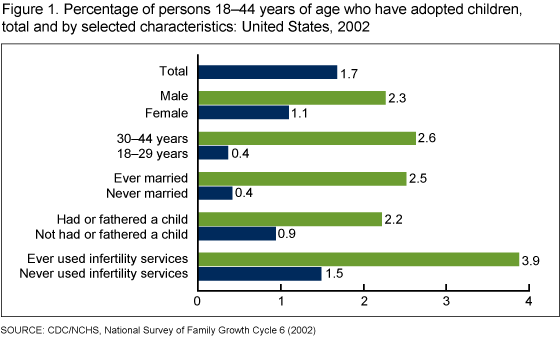 image icon
How is age associated with adoption?
Adoptive mothers are older than mothers who accept not adopted children. There is no difference in the overall age distribution between adoptive and nonadoptive fathers.
About i-half of adoptive mothers are between ages forty-44 years (51%) compared with 27% of mothers who accept not adopted.
Conversely, only 3% of adoptive mothers are betwixt ages 18-29 years compared with 27% of biological mothers.
Men adopt children at younger ages than women—more than one-quarter of adoptive fathers are anile 30-34 years compared with xvi% of adoptive mothers.
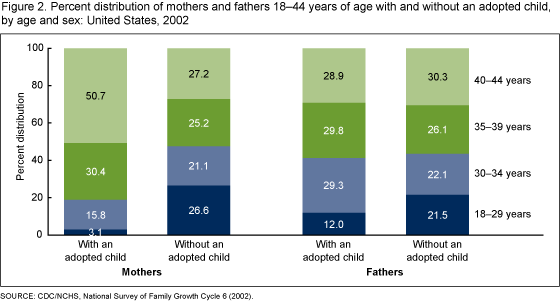 image icon
Does marital status make a deviation in who adopts?
Significantly more than always-married men (4%) take adopted children than never-married men or women of either marital status.
Although never-married persons aged 18-44 years are less probable to take adopted children compared with those who take ever been married, there are about 100,000 never-married women and 73,000 never-married men who adopted children in 2002 (four).
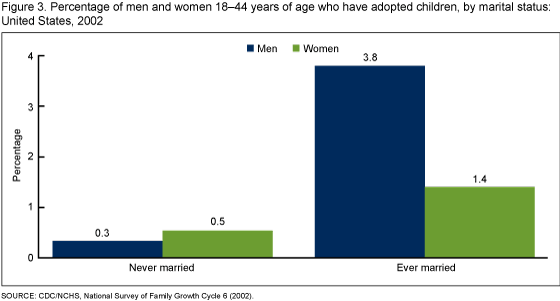 image icon
Practise only childless adults or people who take used infertility services adopt children?
Men who take fathered children are more likely to have adopted a child compared with men who take not fathered children.
Equal percentages of women who take and who have not had a birth have adopted children.
Four times as many men who accept fathered children take adopted children compared with women who have given birth.
When couples have troubles conceiving a child, either or both individuals may use infertility services to increment their possibility of having a biological child.
Five pct of women (or their partners) who have ever used infertility services have adopted children. This is almost 3 times the percentage adopting for men (or their partners) who have ever used services.
Women (or their partners) who take e'er used infertility services are ten times more likely than women (or their partners) who have not used infertility services to take adopted children.
Women (or their partners) who have not used infertility services are the least likely to have adopted children.
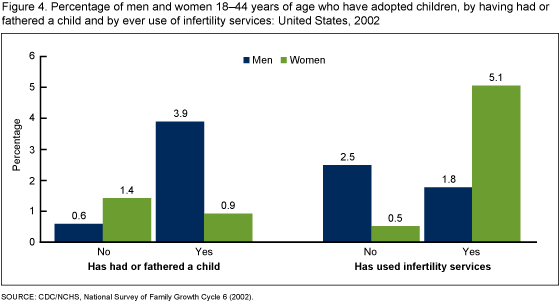 image icon
How else do adopters differ from nonadopters?
Women with incomes less than 150% of the poverty level are significantly less likely to have adopted children than women with incomes 150% of the poverty level or greater or men in either income group. Significantly fewer Hispanic women have adopted children than non-Hispanic white or black women or Hispanic, non-Hispanic white, or black men.
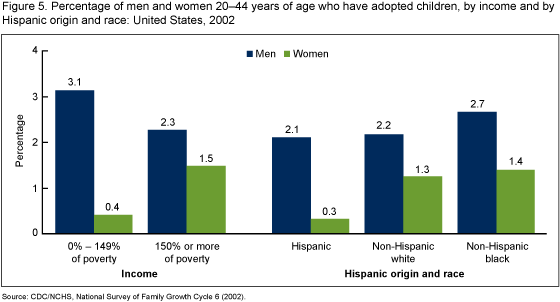 image icon
If adults desire to adopt, are there babies available?
Fewer infants are available for men and women to adopt now than in the past. Never-married women go along to be the near likely group of women to relinquish an infant for adoption (four,5). Looking at births to never-married women prior to 1973, about 9% of infants overall and 20% of infants born to white never-married women were relinquished. For births occurring between 1996 and 2002, but i% of babies built-in to never-married women were relinquished by their mothers for adoption inside the offset month of the babies' lives.
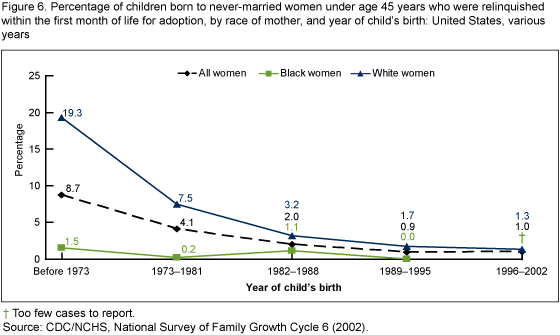 image icon
Summary
In 2002, ii pct of adults aged 18-44 years had adopted children, approximately ii million people. Significantly more adopters are men, over age 30, are ever married, have biological children, and have ever used infertility services. Women who have adopted are older than women who accept given birth to a child. Significantly more ever-married men have adopted children compared with never-married men or women in either marital status. Women who have e'er used infertility services are more probable to accept adopted compared with women who have non used these services. Men who take adopted are more probable than men who accept not adopted to take also fathered a kid. Hispanic women are significantly less likely than non-Hispanic women or men of whatsoever race or ethnicity to take adopted children. Women with incomes beneath 150% of the poverty level are significantly less likely than women with higher incomes or men, irrespective of poverty condition, to accept adopted children. The percent of infants relinquished by never-married mothers has declined to 1.0%, or fewer than seven,000 infants annually.
Definitions
Ever had or fathered a biological child: It is a yes or no variable that indicates whether a woman has ever given nascency or a man has ever fathered a kid.
Ever used infertility services: Although similar for women and men, is defined slightly differently. It is a yes or no variable indicating whether the respondent or a spouse or partner had ever sought medical help to have a baby. Women were asked two divide questions: "Have you or a married man or partner ever been to a doctor or other medical care provider to talk about ways to help you lot get significant?" and "Non counting routine cheque-ups, prenatal intendance, or advice about a pregnancy, accept y'all ever been to a medico or other medical care provider to talk almost ways to help you prevent miscarriage or pregnancy loss?" Men were asked 1 question, "Did you lot or your wife or partner ever get to a md or other medical care provider to talk nearly means to help you accept a infant together?" This variable was computed for all women but only for men who had sexual intercourse.
Hispanic origin and race: It is defined using multiple questions. First, respondents of Hispanic or Spanish ancestry are classified as "Hispanic," regardless of reported race. Then, non-Hispanic respondents who are only white or only blackness are classified every bit either "non-Hispanic white" or "not-Hispanic black." The residual respondents (i.e., those of other unmarried races and those of multiple races) were classified as "non-Hispanic other."
Marital status: Measured at the time of the interview, it is a dichotomy indicating whether the respondent has always been married. The ever-married category includes those respondents whose current marital condition is married, widowed, separated, or divorced.
Percentage of poverty level: It is a mensurate of the full family income, adjusted for the number of persons in the family unit, relative to the almanac definition of poverty provided by the U.S. Census Agency. It is measured at the time of the interview.
Data source and methods
Information are from the Cycle 6 (2002) National Survey of Family Growth, a nationally representative report of reproductive-historic period women and men conducted in their homes. The final data file consists of 7,643 women and 4,928 men xv-44 years of age. For this written report, respondents aged 15-17 years were not analyzed, resulting in a sample size of 6,969 women and 4,295 men. Poverty level of the household is shown only for respondents aged xx-44 years considering teenagers are less likely to study household income accurately.
The numbers, percentages, averages, and other statistics shown in this study are weighted national estimates. The weights account for different sampling rates and for nonresponse bias and are adjusted to hold with population control totals provided past the U.S. Census Bureau. (See Lepkowski, et al. (6) for detailed information most sampling and weighting procedures.)
Statistics for this report were produced using SAS softwareexternal icon, version 9.1. Standard errors were calculated, and tests of significance performed, for selected comparisons in this written report. The statistical package SUDAANexternal icon was used for the adding of standard errors, because it takes into account circuitous sample designs such as that of the NSFG. When two percentages were compared, differences were evaluated using two-tailed t-tests at the 0.05 level; when in that location were more two categories to be compared, differences among distributions of the percentages were assessed using χ2 tests of association at the 0.05 level. Merely differences that were statistically pregnant were discussed in this study.
About the authors
Jo Jones is with the Centers for Disease Control and Prevention's National Center for Health Statistics, Sectionalisation of Vital Statistics, Reproductive Statistics Co-operative.
References
- Bachrach CA, Stolley KS, London KA. Relinquishment of premarital births: Evidence from national survey data. Family Planning Perspectives 24(i):27-32. 1992.
- Bachrach CA. Adoption equally a means of family formation: Data from the National Survey of Family Growth. Periodical of Marriage and the Family 45(4):859-65. 1983.
- Bonham GS. Who adopts: The human relationship of adoption and social-demographic characteristics of women. Journal of Marriage and the Family unit 39(2): 295-306. 1977.
- Jones J. Adoption experiences of women and men and demand for children to adopt past women ages 18-44 in the U.s., 2002. National Center for Wellness Statistics. Vital Health Stat 23(27). Hyattsville, MD: National Center for Health Statistics. 2008.
- Chandra A, Abma J, Maza P, Bachrach C. Adoption, adoption seeking, and relinquishment for adoption in the United States. Advance information from vital and health statistics; no 306. Hyattsville, Dr.: National Center for Health Statistics. 1999.
- Lepkowski JM, Mosher WD, Davis KE, Groves RM, van Hoewyk J, Willem J. National Survey of Family Growth, Cycle half dozen: Sample design, weighting, imputation and variance estimation. Vital Health Stat two(142). Hyattsville, MD: National Center for Wellness Statistics. 2006.
Suggested Citation
Jones J. Who adopts? Characteristics of women and men who have adopted children. NCHS data brief, no 12. Hyattsville, MD: National Center for Health Statistics. 2009.
Copyright information
All material appearing in this written report is in the public domain and may be reproduced or copied without permission; citation equally to source, however, is appreciated.
National Center for Wellness Statistics
Director
Edward J. Sondik, Ph.D.
Interim Co-Deputy Directors
Jennifer H. Madans, Ph.D.
Michael H. Sadagursky
prenticeoundiciat1949.blogspot.com
Source: https://www.cdc.gov/nchs/products/databriefs/db12.htm
0 Response to "Statistics for Adoptable White Babies in the Us"
Post a Comment