Publicity Art Before and After Famouse Art Used as Publicity
The vintage blueprint revolution is upon united states! And it's influencing everything from fashion to art to architectural pattern. With pop-goes-vintage music groups like Postmodern Jukebox and historical dramas similar Downton Abbey engaging audiences worldwide, the Roaring 20s are making a big comeback. Of course, Art Deco is post-obit suit.
Fine art Deco is a mode of visual arts, architecture and design that developed into an international pattern movement in the 1920s and 30s. Let'due south accept a look at its trajectory through history, the echoes of which even so resound today.
The nascence of Fine art Deco
—
Before Art Deco, the leading decorative mode around the world was Art Nouveau. Developed in the 1890s, Fine art Nouveau is characterized by soft curves and a flowery, ornate manner that imitates the beauty of nature—a stark contrast to the harsh industrialization of the mean solar day. Illustrations similar Alphonse Mucha's (below) often characteristic beautiful young women, flowering haloes and neoclassical robes that came to typify the Art Nouveau way.
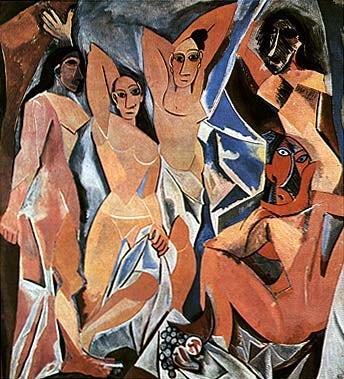
Art Nouveau lasted until the turn of the early 20th century, when World War I helped advance an increasingly industrial and progressive Western order.With the onset of war and ascent of industrialization came mod art movements: Cubism, characterized past works like Pablo Picasso'south Les Demoiselles D Avignon and architecture like Raymond Duchamp-Villon's La Masion Cubiste ; Futurism, every bit portrayed in paintings similar Giacomo Balla'south Abstract Speed + Sound and Umberto Boccioni's The Metropolis Rises ; and Constructivist art, which depicted the bold wording and stark geometry of Bolshevik Revolutionary war propaganda.
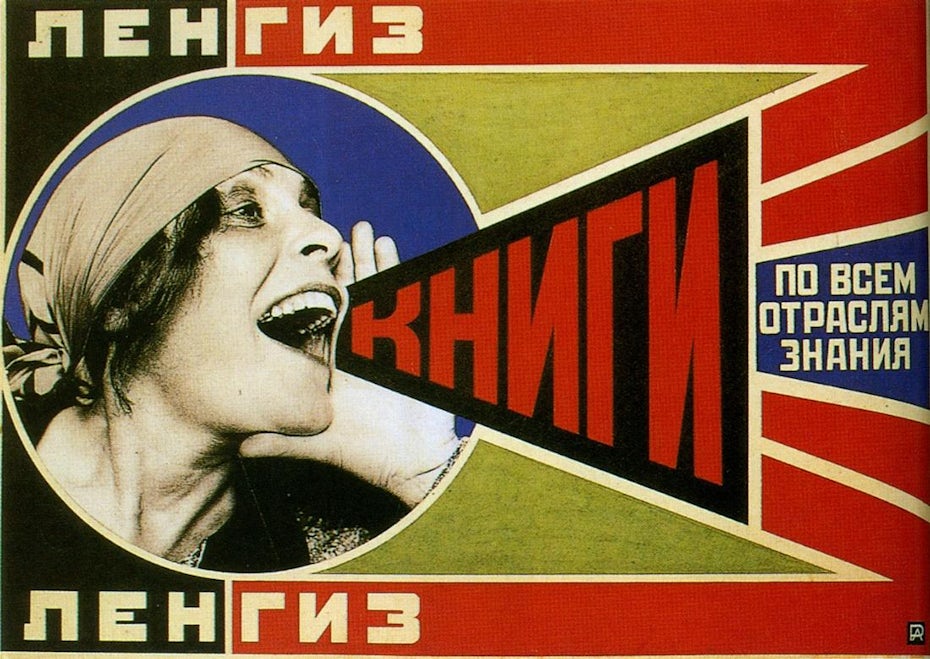

These movements coalesced to class a new international mode known as Art Deco, derived from Art Décoratifs, an abbreviated form of the 1925 World's Fair in Paris, the Exposition Internationale des Arts Décoratifs et Industriels Modernes.
Fine art Deco'due south assuming lines, geometric shapes and modern aesthetic represented luxury, glamour and technological prowess during the wartime and post-wartime era.
Fine art Deco manifested in graphic design with images of industry, similar colossal ocean liners with sleek, airbrushed surfaces that emulate steel and chrome plating. The style is represented in architectural icons similar the Chrysler Building and the American Radiator building. They are constructed with an exterior of reinforced concrete and an interior of highly polished marble, glass and steel.
Advert shifts to art deco
—
Later WWI, advertisement posters also shifted from flowing, floral analogy to streamlined, geometric graphic design. Stiff diagonals and dynamic typefaces demonstrated the desire for glamour, power, luxury and strength.
Machine age style
—
More than than just a manner, the Art Deco aesthetic reflects the major cultural shifts happening between the 1920s to 40s, when metalworking machinery and freight locomotives started changing the world. This era, known equally the Machine Age, was characterized by mass production, automobile assembly lines, high speed printing presses, the nationwide distribution of goods and modern aircrafts & battleships. Too, in Art Deco, shapes became simplified and streamlined. Potent vertical lines and aerodynamic forms mirrored skyscraper steel beams. Airbrushing furnishings and sunbursts evoked wartime mechanism. Sleek and angular typefaces reflected a Jazz Age gleam.
Take, for example, A.1000. Cassandre, the father of Machine Historic period poster mode. He popularized airbrushing techniques that give a auto-like surface to his images and revolutionized pattern for years to come. In fact, his iconic Art Deco posters are highly sought afterwards, even today.
Art Deco has come to represent cosmopolitanism and the ultramodern, and Art Deco advertisements, in particular, present products and services in a striking, futurist light. The way'southward influence besides spread internationally, and in Nihon, came to typify Western influence and the boldness of the modern era.
Art Deco'due south influence today
—
Art Deco paved the way for post-World War II 1950s Object Affiche Style, in which everyday objects became giant icons used to emphasize advertised products. Feature of Object Poster Style advertisements, Peter Birkhauser's "Feba Pen" affiche puts a dramatic zoom on the tip of a fountain pen with severe clarity, captivating focus and bold event. In the subsequent decades, advertizing styles that emphasized consumer goods faded, especially during the 1960s counterculture move, which harkened back to Art Nouveau's penchant for free form.

Now a century later, Art Deco has made a comeback in graphic design. We tin can run across the gimmicky use of Art Deco manner ad in companies like Speakeasy Brewing Co., in movies like Baz Luhrmann's The Great Gatsby , in TV shows like "Boardwalk Empire," in typefaces similar Chicago, Outset, and Bifur, and in logos created past the global design customs of 99designs.
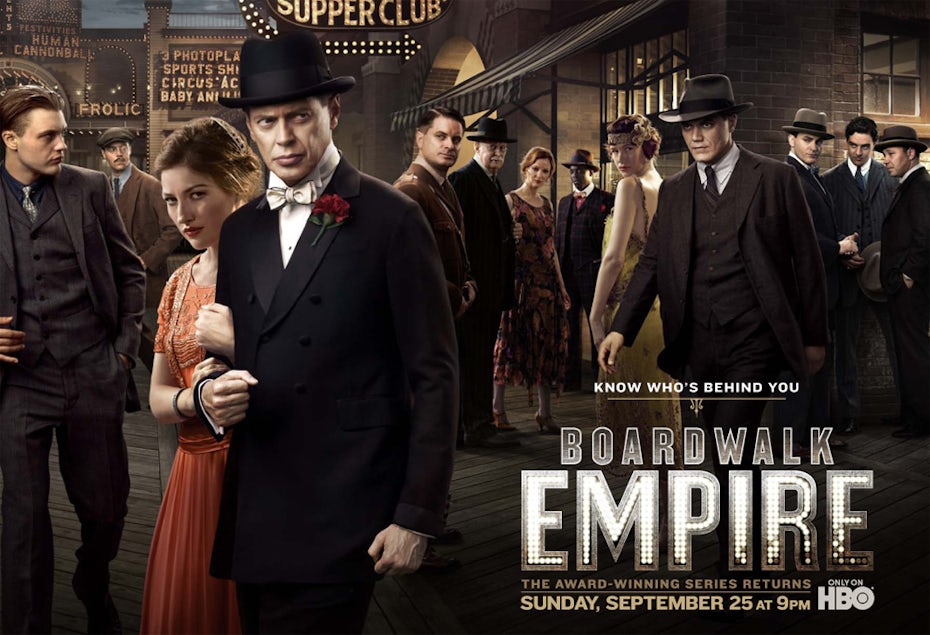

In the case of Art Deco, vintage and mod expertly coagulate to create a assuming, classic await. Consider the Art Deco'due south aesthetic to convey sleek and chichi style, and play on our fascination with archetype pattern that has a contemporary, futuristic flair.
Looking for more than Art Deco ad inspiration? Check out 99designs Observe for more stunning examples from our global design community.
prenticeoundiciat1949.blogspot.com
Source: https://99designs.com/blog/design-history-movements/art-deco-advertisements/
0 Response to "Publicity Art Before and After Famouse Art Used as Publicity"
Post a Comment