what happens to documents owned in microsoft teams when the owner is removed from the team?
With the rapid growth of Microsoft Teams as the hub for collaboration, it'due south only natural that things go missing. It'due south easy to roll-out Teams without any planning, governance, or finish-user preparation, and so it shouldn't be a surprise when users unknowingly delete things.
The good news is, most content is easy to recover.
Information technology'due south a affair of agreement where the content is stored (generally it's not in Teams).
For example, Files shared in a Teams aqueduct are stored in the SharePoint site that is associated to that team, while conversations are saved in Exchange Online. Once we know where the data and content are stored, we tin go about recovering it.
Permit's look at what happens to the post-obit objects and data when they're deleted in Microsoft Teams and see if we tin can recover them:
-
Files
-
Conversations/Conversation History
-
Tabs, Connectors or Bots
-
Channels
-
The entire Team!
Files
As mentioned, all the documents in the Files tab in a Team are stored in the SharePoint site working in the background and simply fabricated accessible in Teams (Note: personal conversation files are stored in OneDrive).
For content recovery, that means that all the same rules that apply to files in SharePoint volition apply to files in Teams.
Nosotros have access to version history for the files and we can recover deleted files for 93 days from the Recycle Bin.
From the Teams file tab, click Open in SharePoint in the menu to launch the Document Library in SharePoint. From here you'll see the typical SharePoint Document Library.
Now information technology'south quite easy to check the version history, restore a previous version, or caput into the Recycle Bin to recover a deleted item. Permissions of grade use as they always practice in SharePoint and you'll need to accept the appropriate permission levels to restore version history or recover files from the Recycle Bin.
Hither's a short visual of the steps:
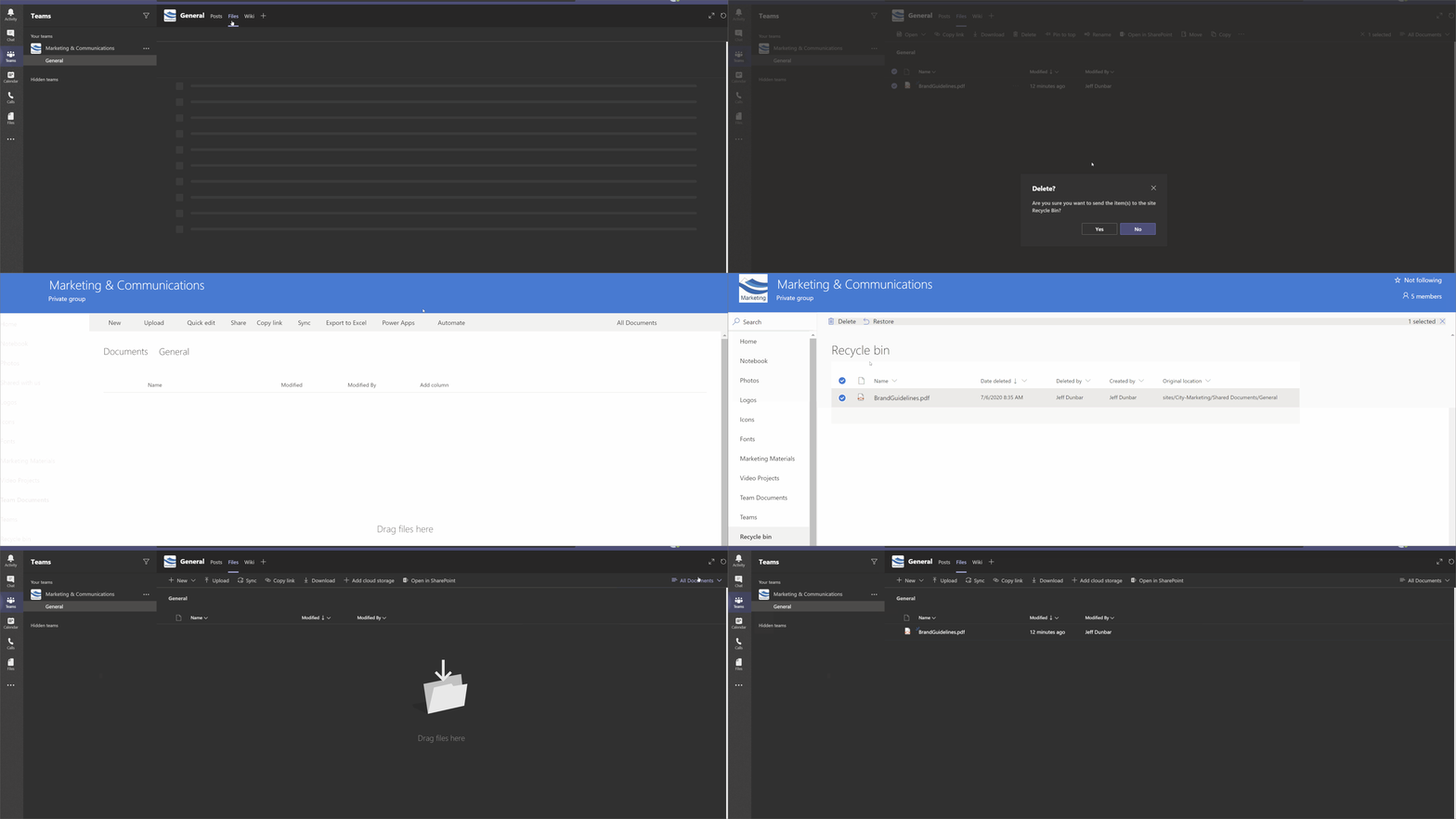
How to access the library in SharePoint and recover a file from the recycle bin
Conversations/Chat History
Conversation and Chat History are stored in Exchange.
These are non recoverable straight, but they are searchable and auditable.
Through eDiscovery processes, users with the right permissions can find the conversation history and even manually download them. This allows them to re-upload them (ane at a fourth dimension) to Teams, but that likely isn't worth the attempt it takes.
If you actually demand to preserve chat history, you lot can use eDiscovery, Legal Holds, or Retention policies to proceed them available and searchable even afterwards they're deleted in Teams. This gives you some protection from terminate-users deleting letters that may be of import.
Tabs, Connectors or Bots
Unfortunately, we can't recover tabs, connectors or bots at this time. If a user deletes one of these from a channel, it is gone.
A tab, connector or bot needs to exist added back manually and reconfigured over again.
In most cases, it's simply the tab or connector that is removed from the channel, and the underlying resource likely still lives on, so adding them back and re-configuring shouldn't be too much piece of work.
In that location are too a few settings for a Squad that tin prevent users from deleting these, but it also prevents them from creating or updating them. There is always a line between protecting content, and the autonomy needed for collaboration that needs to exist carefully weighed. Limiting a user's ability to add and update tabs and connectors in Teams may prove to be counter productive and too limiting. This results in unhappy users or creates fifty-fifty more requests to IT to help set up simple tabs or connectors in potentially hundreds of Teams.
It'southward best to let people self-manage Teams, while keeping stricter command over organization-wide Teams or Channels where appropriate.

Permission controls in Teams
Channels
While the conversations and content (files) in Teams are stored in Commutation and SharePoint respectively, the Channels themselves are easily recovered directly in the Squad settings. Once a channel is deleted, it's moved into the deleted section in the Channel tab. Information technology will remain here for 21 days and can be recovered by Team owners and members past default.
The Channel tab is found under the "Manage team" setting for that Team. Expand the Deleted section and click the Restore button on the far right for the Channel you want to restore. This volition restore the Channel and all the conversations and content from that Aqueduct.
Below is a visual of the steps:
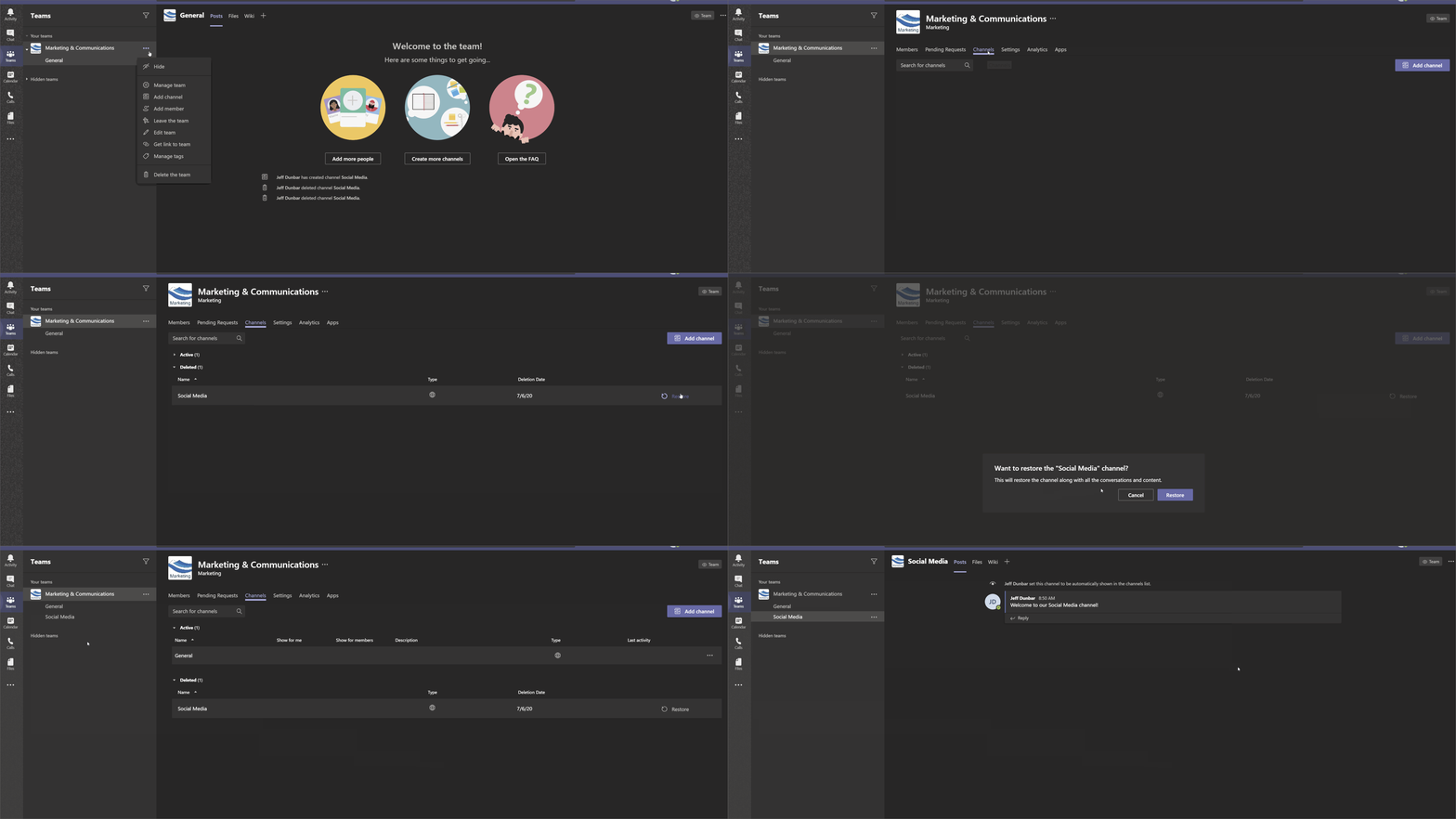
How to restore a channel
An Entire Team was deleted!
Okay, okay! Don't panic.
We can recover the Team and all content associated with it. If you aren't the owner of the Team, this requires help from your Global or Group Administrators.
When a Team is deleted, it'south actually the Microsoft 365 group that is deleted along with all information technology's associated content such equally:
-
The grouping's object, properties, and members
-
Group'southward e-post address
-
Substitution Online shared Inbox and agenda
-
SharePoint squad site and files
-
OneNote notebook
-
Planner
-
Teams
-
Yammer group and group content (if the Microsoft 365 group was created from Yammer)
Groups remain in what Microsoft calls a "soft-delete" for thirty days.
Information technology's chosen a soft-delete considering the group and the above-mentioned content can be restored during this period. If your team was deleted more than 30 days ago, it's deleted permanently (ensure you have proper Data Governance policies to prevent this).
Owners can recover the Microsoft 365 group through Outlook on the web. From the Groups drop downward, choose Manage groups which will open a new window. Nether the groups drop down, choose Deleted, find the group yous desire and click the Restore tab. Here's how:

How to restore a grouping from Outlook on the web
If you aren't the Owner, then a Global or Groups Administrator tin restore the group from the Microsoft 365 Admin Center. They will demand to head over to the Groups section, deleted groups, and then restore the group that was deleted.
Conclusion
While about of the content is recoverable, information technology is of import to plan your Teams curlicue-out and train your users to forestall unnecessary headaches. You don't desire to impede your user'due south creativity or limit their ability to work productively but you lot DO want to protect your important content and data through proper Information Governance.
Since Teams is backed upwards by the Security & Compliance capabilities in Microsoft 365, y'all can use the out-of-the-box auditing, reports, content search, e-discovery, legal holds, and retentivity policies or third political party tools to prevent information from going missing or lingering longer than it's needed.
It's easy to drop Microsoft 365 products on users with niggling governance or training. Spend the fourth dimension to roll-out Teams correctly, railroad train your users and y'all'll exist able to avert many of the situations described in this mail.
Related posts
Our team has helped dozens of organizations adopt collaboration solutions. Reach out for help with planning your Microsoft Teams gyre-out.

prenticeoundiciat1949.blogspot.com
Source: https://www.gravityunion.com/blog/2020/7/deleted-content-microsoft-teams
0 Response to "what happens to documents owned in microsoft teams when the owner is removed from the team?"
Post a Comment